


A recent Axios story, “How climate change is impacting Central Ohio,” suggests that central Ohio is suffering various effects from climate change, such as hotter temperatures, longer allergy seasons, and more intense rain. [emphasis, links added]
These claims are misleading, at best, and simply false in most instances.
Also, proposals to reduce greenhouse gas emissions as planned by Columbus, Ohio’s “Climate Action Plan,” will limit freedoms and cost the economy while having little or no beneficial impact on the regional or global climate.
Axios reported that Columbus, Ohio, mayor Andrew Ginther is very concerned about climate change to the point that when he served as vice president of the U.S. Conference of Mayors, he “led a delegation of U.S. officials at the U.N. Climate Change Conference COP28 in Dubai.”
Columbus has a “Climate Action Plan” that “calls for a 45% reduction in greenhouse gases by 2030 and full carbon neutrality by 2050.”
Ginther insisted to Axios that climate change “is real” and that Columbus has been harmed. Axios reports that central Ohio has suffered various effects from climate change.
These include:
None of Axios’ claims are grounded in solid facts, or at least the cause of the problems is being misattributed to global climate change, and the evidence that does exist undercuts the need for Ginther’s climate action plan.
Average temperature measurements have trended warmer for Ohio since 1900, by about 1.5°C, but this is not caused by or even accompanied by an increase in “very hot” days.
Data from the NOAA National Centers for Environmental Information (NCEI) show that extreme or dangerous heat has actually trended downwards since the 1930s peak. (See figure below)

The warming experienced in the late 19th and the early part of the 20th century in Ohio, as elsewhere, is most likely attributable to the natural response to the end of the Little Ice Age.
What has gradually increased since the 1960s is the number of warmer nights, accompanied by a slight decline in the number of very cold nights.
This indicates that something other than greenhouse gas emissions is driving average warming. There is no reason in physics for why increased greenhouse gas concentrations would selectively or primarily cause warming at night.
A large portion of this nighttime warming, especially around cities like Columbus, is likely due to the Urban Heat Island Effect (UHI).
Climate at a Glance: Urban Heat Islands explains that many urban temperature stations are influenced by the heat-trapping effect of hard surfaces like concrete and asphalt, not to mention the outputs of air conditioning units and thousands of vehicles on the road. This effect grows as the population and urban sprawl do.
Previous Climate Realism posts have shown that rising average temperatures recorded in Phoenix, Houston, Boston, and across the U.S. in general over the past few decades are driven by a decline in nighttime low temperatures due to the UHI.
Regarding allergy seasons, Climate Realism has discussed how this problem is due to a longer growing season in articles here, here, and here, for example. More pollen production does exacerbate allergies.
However, the lengthened growing season and increased pollen are a boon for plant life and pollinating insects. It is resulting in more food production and a general greening of the Earth.
This means that the suffering that those with seasonal allergies experience is offset by more wildlife habitat and less hunger and malnutrition. Surely that’s worth a few extra days or weeks of taking antihistamines.
Wildfire weather usually involves high winds and dry conditions. Drought has not increased in frequency or intensity in Ohio, and the amount of acreage lost to wildfires and the number of fires show no sustained trend that might be attributed to long-term climate change since records began in 2006.

As for mosquito season, once again, entomology shows that mosquito prevalence is more complicated than merely being driven by temperature.
Disease-carrying mosquitoes were, in fact, endemic to Ohio before its largest swamps were drained for development, and suppression efforts were instituted in the 1950s through the 1970s, which included the widespread use of DDT.
As Climate Realism covered here and here, for example, trade, transportation, changed development and landscaping trends, and reduced or less effective mosquito control efforts have resulted in a slight increase in mosquito-borne illnesses, although the instances are still much fewer annually than in the late 1800s through the mid-twentieth century.
The land sinkage issue mentioned by Axios isn’t even a climate issue.
It is called subsidence and is a result of the overuse of groundwater, making it a civil engineering issue that Climate Realism has discussed previously, but need not discuss here.
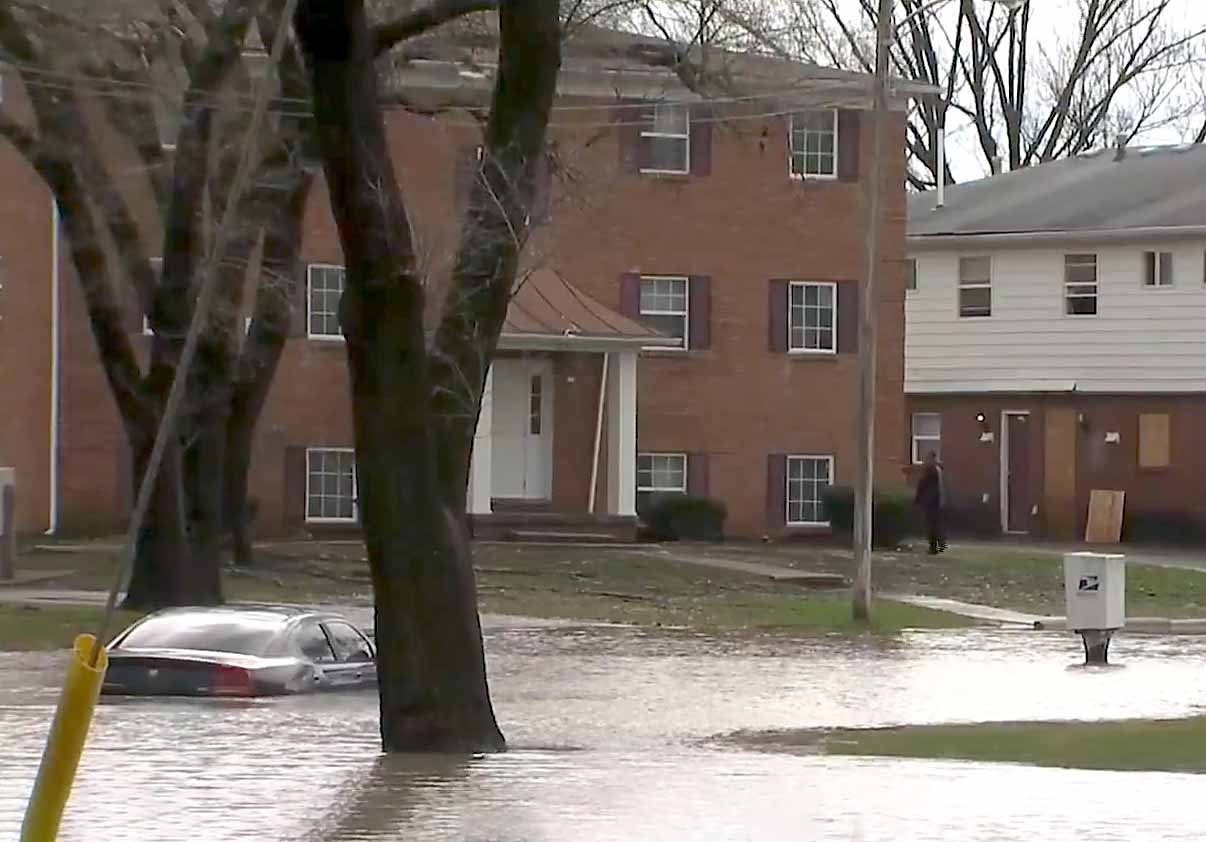
The last climate impact that Axios lists is an increase in intense rainfall and related flash flooding.
The National Oceanic and Atmospheric Administration’s NCEI data show that precipitation has increased modestly over the past few decades in Ohio, and 2-inch “extreme” precipitation has slightly increased since the 1960s, but this has not correlated with more extreme flooding.
The worst flood in Columbus, Ohio’s Scioto River, occurred in 1959 according to existing river gage data, but a worse flood is reported as having occurred in 1913.
Specific “flash” flood data is harder to come by, but in general, even the Intergovernmental Panel on Climate Change has only “low confidence” that there has been an increase in flooding attributable to climate change.
In short, the available data refutes Mayor Ginther’s claims about climate change harming central Ohio, or the state in general.
Weather and damaging weather-related events, like wildfires and flooding, have not become appreciably worse during the recent period of modest warming, the measurement of which is likely due to localized UHI impacts, not global warming.
A single city’s pledge to go “carbon neutral” will have absolutely no impact on global warming, but it could limit people’s freedoms and undermine its and the surrounding region’s economic fortunes.
If Columbus wants to see less intense heat and fewer warmer nights, the city should look into things that reduce the heat-capturing effect of hard surfaces.
These techniques usually involve planting more trees along the streets, and other ways to shade concrete and asphalt for more of the day.
And in response to land subsidence and mosquitoes, it could implement better water use policies and improved pest controls, which might include public service announcements admonishing residents to reduce standing water.
As for Axios, it would better serve its readers by checking the facts before publishing false, alarming climate claims. That’s what legitimate journalistic enterprises have done historically.
Top image of a Central Ohio flooding event via NBC4/YouTube screencap
Read more at Climate Realism


