

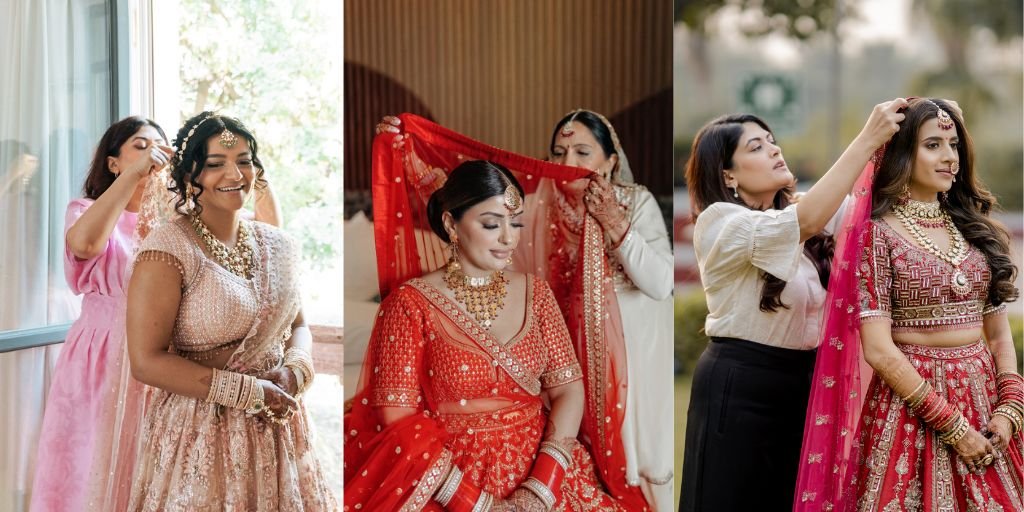

Bridal Veil, Dupatta & Drape Styling Trends
When it comes to Indian bridal fashion, the lehenga, saree or gown may serve as the showstopper for the event, but the dupatta and veil are what often complete the look. They are more than a piece of fabric, adding movement to your outfit and beautifully tying the entire bridal look together. Today brides are embracing bridal dupatta draping styles that not only look picture-ready but also ensure comfort throughout the wedding. From timeless classics to modern statement drapes, bridal veil styling trends have evolved to provide a balance between tradition and personal expression. In this blog by Syl Inc. let’s explore the various trends, techniques and expert insights on how to style your bridal dupatta and veil for that once-in-a-lifetime look.
Also Read: https://styl-inc.com/blogs/indian-wedding-styling-trends-to-watch-in-2025/
Why Dupatta and Veil Styling Matters in Bridal Looks

Credits: Styl Inc.
The dupatta is not a mere accessory in Indian bridal wear, it is a cultural statement, a defining element of style and a key part of the bridal silhouette. The placement of the dupatta, whether placed across the shoulders, pinned neatly to the head or layered for grandeur directly influences how the overall bridal look feels. A neatly draped dupatta impacts the wedding photographs, adding a touch of flair to your photos.
Besides aesthetics, draping styling also play an important role in ensuring the bride’s comfort, poorly secured drapes can lead to discomfort or wardrobe mishaps. This where professional stylists help, bridal styling services in India often focus on not just the outfit curation but also on intricate details like dupatta pleating techniques, veil placement and how the drape of both can be complemented with the jewelry and hairstyles. A stylist ensures that every layer, fold and pin give a cohesive bridal look, allowing you to move confidently while still looking regal.
Also Read: https://styl-inc.com/blogs/royal-maximalist-brides-styling-tips-for-the-modern-maharani/
Popular Dupatta Draping Styles for Indian Brides

Credits: Styl Inc.
The Classic Front Drape
The classic front drape is a timeless choice and a go-to for brides during traditional wedding ceremonies. The dupatta is pinned to the head with neatly folded pleats falling over the shoulders and framing the face. This dupatta draping style radiates grace and ensures that you look regal and elegant while also being respectful to tradition and culture.
The Side-Swept Drape
The side-swept drape gives a modern touch to your look if you are looking for a beautiful blend of tradition and trend. The dupatta if flown over on one shoulder and is pinned at the back, giving more freedom of movement while keeping the front of the lehenga and blouse visible. This type of dupatta draping is perfect for sangeet nights and cocktail receptions – giving you enough room to comfortably dance and enjoy throughout the event.
The Cape or Over-the-Shoulder Drape
The Cape or over-the-shoulder dupatta drape is ideal for fusion weddings, giving an elegant and modern touch to your bridal outfit. The dupatta is pinned like a cape, loosely over both shoulders or attached to the blouse to create a flowing and modern silhouette. It pairs well with modern style bridal lehenga cuts and minimal jewelry, which is why it’s quite popular for reception looks.
The Belted Dupatta Drape
The belted dupatta drape is a practical yet chic option, giving you the perfect structured and secure appearance. This type of draping is very popular especially for Mehndi, Sangeet and Reception events. It uses a thin belt that is often embellished and is used to cinch the dupatta at the waist to keep it in place through hours of movement. It is an ideal option for those brides who want to dance, mingle and enjoy without worrying about adjusting their dupatta.
Also Read: https://styl-inc.com/blogs/trendy-ways-to-drape-your-dupatta-styl-blog/
Double Dupatta Layering for Bridal Outfits

Credits: Styl Inc.
The double dupatta layering is one of the most luxurious and striking Indian bridal drape styles. This dupatta styling technique involves using two dupattas, the primary dupatta often heavy and ornate is place over the head while the secondary dupatta can be draped stylish across the body. This adds depth, color contrast and a dramatic length to your look, giving you a regal and royal bridal look that is often seen in grand weddings. The type of fabric and color plays a key role in how the two dupattas complement each other and your overall bridal look.
Choosing a heavily embroidered dupatta placed on the head while a softer sheer dupatta draped across the shoulders add balance and elegance to your outfit. Event-based layering also matters, the wedding day typically calls for a traditional dupatta layering while for the reception the look can be switched with a more modern, sheer veil paired with a more relaxed side drape. A two-dupatta bridal look not only enhances the visual aesthetic but also offers versatility in styling across different functions.
Also Read: https://styl-inc.com/blogs/here-are-some-lehenga-dupatta-draping-styles-for-bride/
Modern Veil Styling Ideas

Credits: Styl Inc.
While a dupatta is a timeless staple in bridal wardrobe, veils are also emerging as new pieces in Indian bridal fashion. So many brides are experimenting with modern bridal veil ideas that mix Indian and western fashion elements. Floor-length sheer veils with delicate motifs or beadwork can be a beautiful option to highlight intricate details without overshadowing the outfit. A short or minimal veil offers a light and fresh vibe to your outfit, perfect for intimate weddings.
These modern bridal veil ideas give you the ability to add a touch of personality to your outfit while also playing with the different themes of Indian bridal styling. The right veil and dupatta combinations for weddings ensure that the bride stand outs in the crowd and in the wedding photos. Veils allow the bride’s hairstyle and jewelry to shine through with a touch of elegance and style. Pairing Western style veils with traditional bridal lehengas gives a bold, beautiful and stunning combination of cultures that especially works well for destination and culturally blended weddings.
Dupatta & Veil Coordination Across Events

Credits: Styl Inc.
A well-planned bridal look isn’t just for the wedding day. Stylists help to coordinate dupatta and veil styling across all wedding events to create a cohesive yet unique bridal aesthetic. . For engagements and sangeet nights lightweight fabrics like chiffon or organza allows for playful drapes that are easy to manage while dancing. During the wedding pheras the styling becomes more traditional and secure with heavy fabrics with embroidery pinned carefully to withstand throughout the event. Which is why the traditional head drape is the most reliable choice for brides who don’t want to worry about their dupatta during the wedding rituals. For the reception, many brides opt for minimalist dupatta draping styles or veil-inspired looks that allow room for the outfit and jewelry to shine without overpowering the entire look. This careful coordination across events ensures that each appearance feels distinct while maintaining a cohesive bridal look.
Styling Challenges & Solutions

Credits: Styl Inc.
While dupatta and veils add a beautiful touch to your look, they can also be tricky to manage. A common challenge faced by brides is managing the weight of double dupattas especially when both dupattas are heavy. Without professional help, this can cause discomfort and strain the head and shoulders. Stylists can help distribute the weight of the dupattas with smart pinning and pleating, ensuring you are able to move freely.
Another challenge is ensuring the dupatta and veil stay pinned securely in place throughout long ceremonies, while dancing or during outdoor windy events. Skilled stylists use lightweight combs, hidden hairpins and clips to ensure everything stays in place without damaging the fabric. Even when you opt for bold draping styles like cape-style drape or a floor-length veil, stylists help you to maintain style without compromising your comfort. These solutions prove why stylists draping vs DIY draping makes a significant difference to the overall look.
Also Read: https://styl-inc.com/blogs/ultimate-guide-to-wedding-styling-from-bridal-to-family-styling-with-styl-inc/
How Styl Inc. Perfects Bridal Drape Styling
At Styl Inc., we master draping like an art form. Our bridal styling services in India ensure that every bride’s dupatta draping looks polished and personalized. During bridal consultations, we conduct draping trials to experiment with placements, pleating techniques and veil integrations to find the perfect match with your outfit. On the wedding day, we provide on-site drape fixes and adjustments whether it is re-pinning a slipping veil during pheras or re-styling the dupatta for the reception. This hand-on support ensures that even elaborate dupatta layering styles remain flawless throughout the event. At Styl Inc., we integrate dupatta draping with the bridal wardrobe planning itself, and help you to seamlessly coordinate your dupatta with jewelry, hairstyles and the groom for a cohesive bridal look. This not only gives you a beautifully draping but a thoughtfully curated bridal experience.
Also Read: https://styl-inc.com/blogs/blogs-on-site-wedding-styling-coordination-india/
Final Thoughts
A beautifully styled dupatta or veil isn’t just another accessory, it is the finishing touch that elevates your entire bridal look. Bridal veil styling trends and Indian bridal drape styles have evolved today to reflect tradition while also embracing the bride’s personal style. From unique dupatta drapes for lehengas to double dupatta layering for brides, every choice can significantly transform a bride’s image. By investing in professional draping and styling services, brides can feel confident, stylish and comfortable in photographs and memories alike. If you are looking for bridal styling services in India that will take care of every pin, pleat and layer, Styl Inc.’s expertise in bridal look coordination and draping will ensure that you look flawless from the moment you step on the aisle. Book Styl Inc. today and transform your bridal look into something you could only dream of.
Until next time
Keepin’ it Stylish
Signing off
Tasneem Lokhandwala
What are the most popular dupatta draping styles for Indian brides?
The most popular dupatta draping styles for Indian brides are the classic front, side-swept and the belted dupatta drape, each offers a unique aesthetic for different events.
How does double dupatta layering work for bridal outfits?
It involves using two dupattas, the primary dupatta often heavy and ornate is place over the head while the secondary dupatta can be draped stylish across the body.
Can I combine a Western-style veil with a traditional lehenga?
Pairing Western style veils with traditional bridal lehengas gives a bold, beautiful and stunning combination of cultures that especially works well for destination and culturally blended weddings.
Which dupatta drapes are best for different wedding events?
For engagements and sangeet nights lightweight chiffon or organza dupattas are easy to manage while dancing. For the main wedding, a traditional and secure dupatta with embroidery is pinned carefully to withstand throughout the event.
How do stylists secure heavy bridal dupattas during pheras?
Skilled stylists use lightweight combs, hidden hairpins and clips to ensure everything stays in place without damaging the fabric
Are veil and dupatta styling services offered by Styl Inc?
At Styl Inc., draping is mastered like an art form. Our bridal styling services in India ensures that each bride’s dupatta draping is polished and personalized.
What is the benefit of professional draping vs DIY draping?
Professional draping ensures the dupatta is pinned securely, is comfortable and is tyles perfectly for photographs, DIY draping can be time-consuming, loosely pinned and can cause discomfort.
Can veil and dupatta styling be done for destination weddings?
Absolutely! At Styl Inc., we provide on-site drape fixes and adjustments whether it is re-pinning a slipping veil during pheras or re-styling the dupatta for the reception.


