

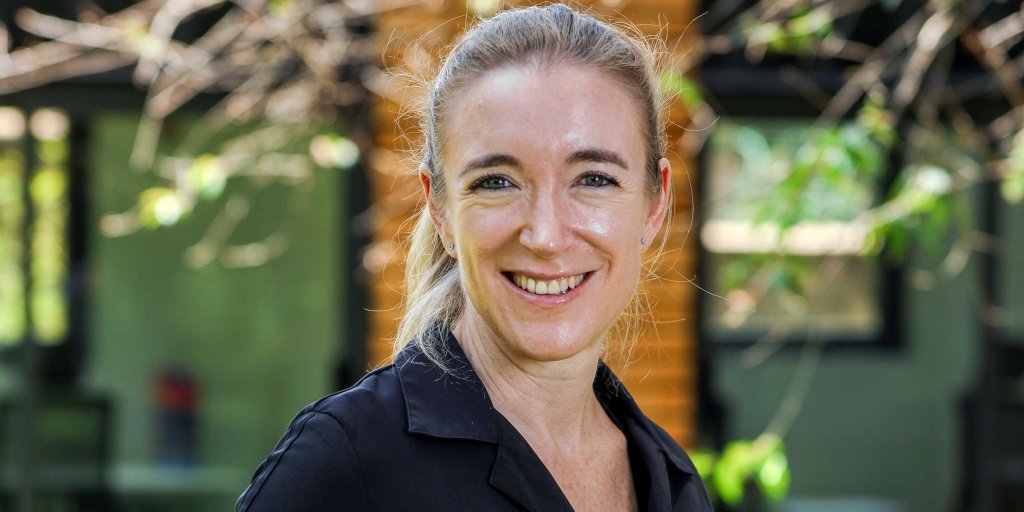

Natalie Kolbe, general partner at Norrsken22
Interview with Natalie Kolbe
GENERAL PARTNER, NORRSKEN22
Lives in: South Africa
Natalie Kolbe, general partner at Africa-focused venture capital firm Norrsken22, believes social commerce could transform how Africans shop. In this interview, she explains why.
For readers who might not be familiar, what exactly is social commerce?
Social commerce, a subsegment of e-commerce, involves individuals or small businesses using social media platforms to sell a wide range of products directly to consumers. They go directly to where their customers already spend their time – TikTok, Instagram, Facebook, WhatsApp – and provide a direct path to purchase.
This method offers a much more personable customer experience, focused on trust and cultural relevance. Sellers leverage their understanding of a particular consumer’s cultural context, language, and purchase requirements to sell in a personalised manner.
E-commerce has faced major hurdles in Africa – such as infrastructure gaps, low consumer trust, and payment difficulties. Why does social commerce work better in this context?
While social commerce is a subset of e-commerce, it still has significantly different qualities versus traditional e-commerce sites like Shein, Amazon, Temu, etc. We believe that social selling does – and will continue to – thrive and win over traditional e-commerce in Africa.
Firstly, there is a notion of trust: a key nuance of the region where consumers prefer to transact with an entity they know or are familiar with. They see a familiar person or business who understands their cultural context and language and/or local dialect. Social commerce essentially bridges the gap between traditional, in-person retail experiences and the depersonalised, faceless world of traditional e-commerce.
What sets social selling apart from e-commerce is its personal touch. Social sellers can tailor and personalise the shopping experience and ensure that their clients are always at the forefront of global trends. Social sellers continuously monitor social media and Telegram/WhatsApp groups, test demand for different products across different markets, and then deploy stock strategically to the markets where demand is the greatest, crucially promoting the product in a culturally and socially relevant manner that resonates.
Secondly, logistics across Africa requires nuanced considerations, and local, in-market players are much better at adapting to the reality of difficulties like poor road conditions or unclear addresses.
Thirdly, the issue of payment is a huge barrier to expansion in Africa. Africa has a plethora of payment methodologies, making local payment integration by international players more difficult. Also, international e-commerce players can only accept digital payments, however roughly 90% of Africans still transact in cash. Conversely, local social sellers are able to accept cash on delivery, opening up their potential market penetration substantially.
Finally, local providers can source and, crucially, warehouse, products locally. Global players do not hold products in-market, so there are the added complexities of duties, timelines and convoluted supply chains.
Norrsken22 has invested in Taager, a social commerce platform. What kind of infrastructure and services does Taager offer to social sellers?
Read more: Norrsken22 leads social e-commerce platform’s $6.75m funding round
Taager is uniquely positioned to unlock entrepreneurship in the Middle East and North Africa (MENA) by giving anyone the tools to launch and grow an online business, equipping social sellers with a seamless end-to-end solution.
Firstly Taager handles product selection and sourcing where their technology is able to spot and predict trends and shopper behaviour.
Secondly, the platform eliminates hurdles to growth by handling all of the logistics – from warehousing to last mile logistics and returns.
And finally, they handle the payments, which in a world where transactions are largely still cash based, is a major logistical plus.
All this removes economic barriers as social sellers do not need to hold inventory or build supply chains and, in so doing, Taager is supporting grassroots commerce, by helping social sellers build independence and wealth.
Does Taager hold its own inventory for sellers to choose from, or can sellers list their own products?
Taager has a very sophisticated way of monitoring global chat groups and social media to spot trends early on what’s gaining traction and becoming popular. They are therefore often able to get early access to products that social sellers may not be able to. Therefore, most of the products offered on the Taager platform are sourced by the team at Taager. However, Taager does run a ‘pre-order’ service where social sellers can submit suggestions on products they would like to sell and Taager will then procure that product on behalf of the seller for them to sell through their own channels.
What types of products are most popular on Taager’s platform?
Taager is relatively product agnostic, instead rather looking for product characteristics to guide their choices. Specifically, the product must be easily demonstrated and sold on social media, through catchy short-form videos. What they have found is that these products tend to fall into three categories, namely home accessories, electronics and leisure products.
Taager is primarily focused on the MENA region. Does this suggest that social commerce is better suited to MENA than to sub-Saharan Africa? And how many platforms like Taager currently operate in sub-Saharan Africa?
Taager’s founding team is Egyptian and hence why the company launched in that market first.
However, the Taager methodology is absolutely transportable to other parts of the world, including sub-Saharan Africa. Social selling is particularly successful in markets that have high social media use, of which sub-Saharan Africa absolutely does. As an example, South Africa and Kenya have some of the highest WhatsApp penetration rates in the world (96% and 97% respectively).
Secondly, social commerce also flourishes in an environment where the retail experience is fragmented and where trust of global e-commerce is relatively low. Also the ability of the social sellers to understand the local cultural context and language and sell in a way that resonates with local buyers, is a big advantage.
Taager can absolutely take their model beyond the MENA region but are focusing on that part of the world first.
(Read our earlier interview with Natalie Kolbe: Seasoned investor talks opportunities in Africa’s tech space, from healthcare to education)


