


PhreeNewsPhreeNews
Notification Show More
Font ResizerAa
  • Africa
    • Business
    • Economics
    • Entertainment
    • Health
    • Politics
    • Science
    • Sports
    • Tech
    • Travel
    • Weather
  • WorldTOP
  • Emergency HeadlinesHOT
  • Politics
  • Business
  • Markets
  • Health
  • Entertainment
  • Tech
  • Style
  • Travel
  • Sports
  • Science
  • Climate
  • Weather
Reading: No near neighbors: Closest technologically advanced aliens may be 33,000 light-years from Earth
Share
Font ResizerAa
PhreeNewsPhreeNews
Search
  • Africa
    • Business
    • Economics
    • Entertainment
    • Health
    • Politics
    • Science
    • Sports
    • Tech
    • Travel
    • Weather
  • WorldTOP
  • Emergency HeadlinesHOT
  • Politics
  • Business
  • Markets
  • Health
  • Entertainment
  • Tech
  • Style
  • Travel
  • Sports
  • Science
  • Climate
  • Weather
Have an existing account? Sign In
Follow US
© 2026 PhreeNews. All Rights Reserved.
PhreeNews > Blog > World > Science > No near neighbors: Closest technologically advanced aliens may be 33,000 light-years from Earth
Mikcvjdehwgl5sawmub9ut.jpg
Science

No near neighbors: Closest technologically advanced aliens may be 33,000 light-years from Earth

PhreeNews
Last updated: September 24, 2025 9:09 pm
PhreeNews
Published: September 24, 2025
Share
SHARE

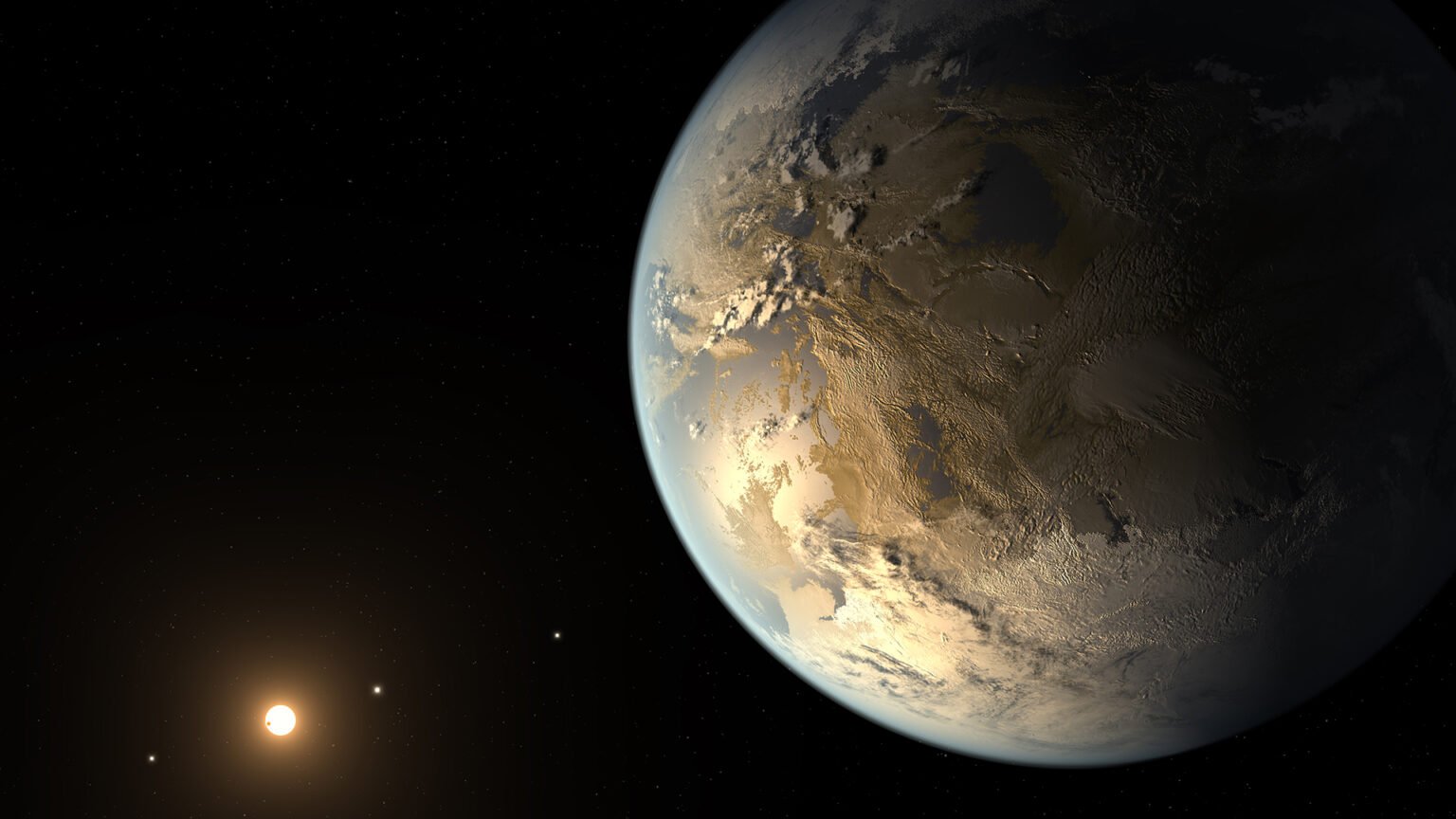
A new study argues that conditions necessary for intelligent extraterrestrial life may be far less common than once thought.

Planets lacking plate tectonics and sufficient carbon dioxide and oxygen could make advanced civilizations like ours extremely rare, Manuel Scherf and Helmut Lammer of the Austrian Academy of Sciences suggested during a presentation at the Europlanet Science Congress and the Division for Planetary Science (EPSC-DPS) in Helsinki earlier this month.

According to their research, for a biosphere to persist long enough to allow for the evolution of complex life and subsequent advanced technology, an Earth-like planet needs to meet certain criteria.


You may like

First, there must be enough carbon dioxide to sustain photosynthesis and prevent atmospheric escape — but not too much that the atmosphere becomes toxic or traps too much heat. The key to this balance is plate tectonics, which regulate the amount of atmospheric carbon dioxide via the carbon-silicate cycle.

But plate tectonics won’t maintain the biosphere forever. “At some point, enough carbon dioxide will be drawn from the atmosphere so that photosynthesis will stop working. For the Earth, that’s expected to happen in about 200 million to roughly one billion years,” Scherf said in a statement. Thus, a planet would also need a life-sustaining biosphere that lasts longer than the time it takes for technologically intelligent life to evolve. On Earth, that evolution took 4.5 billion years.

Second, a world must have a nitrogen-oxygen dominant atmosphere to develop an advanced civilization. Oxygen, in particular, is crucial not only for biology but also for technological advancement. For example, levels below about 18% oxygen could prevent the use of fire, which historically has been essential for metalworking and thus the development of advanced tools.

The team created models to compare the lifespans of biospheres with various atmospheric compositions to the amount of time it might take advanced civilizations to evolve. They concluded that if an advanced technological civilization were to exist in our Milky Way galaxy, the closest it would be to Earth is likely about 33,000 light-years away. Such a civilization would also have to survive for at least 280,000 years — and possibly much longer — for there to be any chance it overlaps with ours in time.

Breaking space news, the latest updates on rocket launches, skywatching events and more!

In other words, the odds are very slim that we coexist with another intelligent civilization in the Milky Way.

Despite the grim outlook, the authors encourage continued efforts, especially through SETI (the search for extraterrestrial intelligence). “Although ETIs [extraterrestrial intelligences] might be rare, there is only one way to really find out, and that is by searching for it,” said Scherf. “If these searches find nothing, it makes our theory more likely, and if SETI does find something, then it will be one of the biggest scientific breakthroughs ever achieved, as we would know that we are not alone in the universe.”

Might Symbolic AI Unlock Human-like Intelligence?
The genus Harpactea Bristowe, 1939 (Araneae, Dysderidae) from the Jijel area (Algeria), with the outline of a brand new species
The genome sequence of a operating crab spider, Tibellus oblongus (Walckenaer, 1802) (Araneae: Philodromidae)
Mathematicians spent 2025 exploring the sting of arithmetic
Long-lost sailback shark rediscovered after more than 50 years
TAGGED:AdvancedaliensclosestEarthlightyearsneighborstechnologically
Share This Article
Facebook Email Print
Leave a Comment

Leave a Reply Cancel reply

Your email address will not be published. Required fields are marked *

Follow US

Find US on Social Medias
FacebookLike
XFollow
YoutubeSubscribe
TelegramFollow

Weekly Newsletter

Subscribe to our newsletter to get our newest articles instantly!

Forex

Market Action
Popular News
Harry styles 2024 getty grid.jpg
Entertainment

Harry Styles Just Ran A Marathon In Under Three Hours

PhreeNews
PhreeNews
September 22, 2025
Chiefs vs. Giants Sunday Night Football Week 3 Betting Predictions
Apple to lastly dethrone Samsung in 2025 world smartphone shipments after 14 years
Israel, Hamas prepared for peace plan Section 1, hostage launch quickly: Trump
The right way to Prep for Your Subsequent Huge Journey (Particularly if You’re Retired and Able to Roam)

Categories

  • Sports
  • Sports
  • Science
  • Tech
  • Business
  • Tech
  • Entertainment
  • Markets
  • Politics
  • Travel

About US

At PhreeNews.com, we are a dynamic, independent news platform committed to delivering timely, accurate, and thought-provoking content from Africa and around the world.
Quick Link
  • Blog
  • About Us
  • My Bookmarks
Important Links
  • About Us
  • 🛡️ PhreeNews.com Privacy Policy
  • 📜 Terms & Conditions
  • ⚠️ Disclaimer

Subscribe US

Subscribe to our newsletter to get our newest articles instantly!

© 2026 PhreeNews. All Rights Reserved.
Welcome Back!

Sign in to your account

Username or Email Address
Password

Lost your password?
