

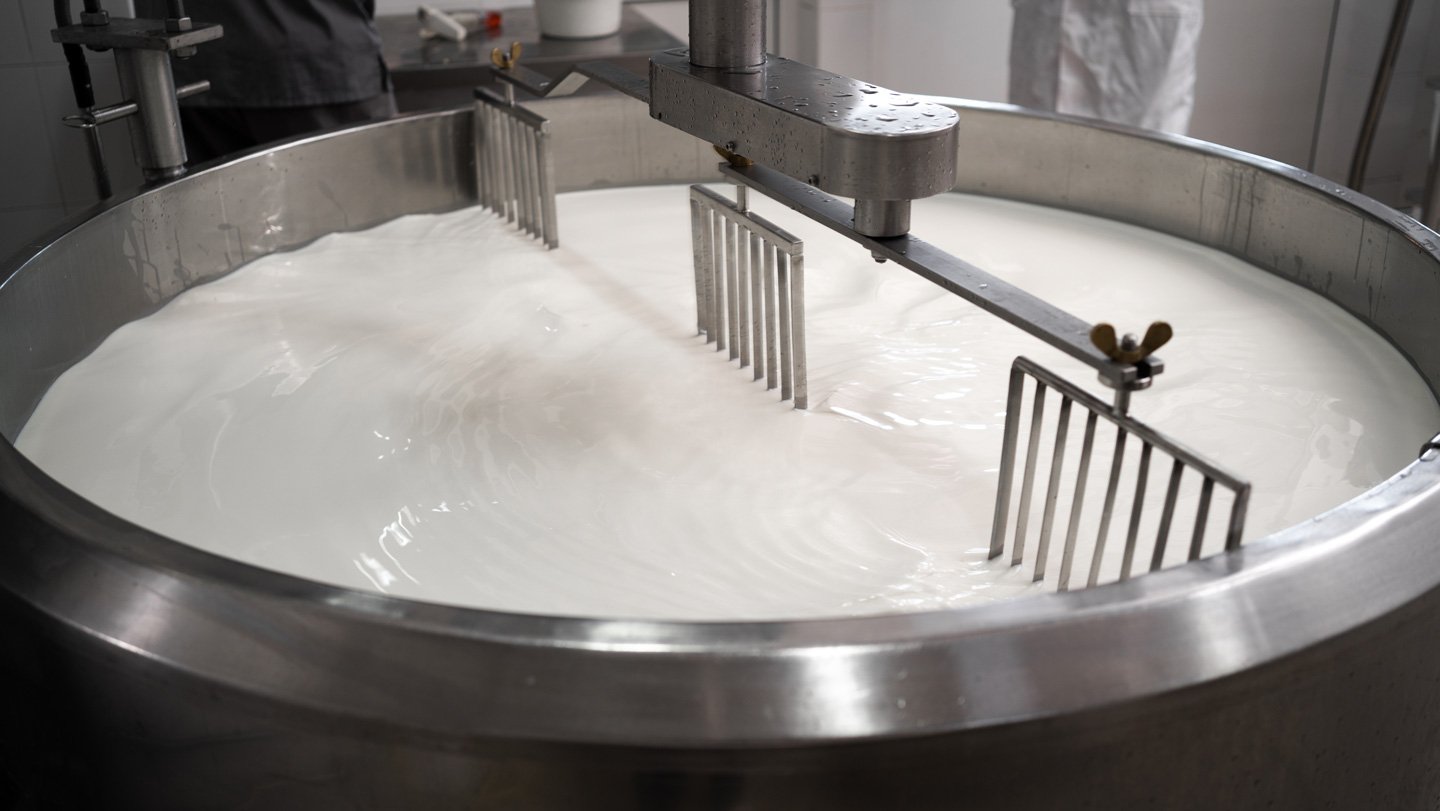

Pasteurization completely inactivates the H5N1 bird flu virus in milk — even if viral proteins linger.
Drinking properly pasteurized milk contaminated with avian influenza remnants won’t increase vulnerability to the infection, researchers report in September 26 in Science Advances. Heat treatment completely neutralized the highly pathogenic avian influenza H5N1 virus while leaving some viral genomic material intact. Those remnants didn’t make mice sick when they repeatedly drank the milk. But drinking the fragments didn’t boost mice’s immune systems against later infection either.
“Pasteurized milk containing H5N1 is safe; raw milk is not,” says Stacey Schultz-Cherry, a virologist at St. Jude Children’s Research Hospital in Memphis, Tenn.
Since the first confirmed infection in the United States in dairy cows in 2024, H5N1 has spread to 17 states. That includes Nebraska for the first time, the U.S. Department of Agriculture reported September 15. The spread is concerning because the virus can spill over to humans.
The U.S. Centers for Disease Control and Prevention has confirmed multiple H5N1 infections in people, including one death. CDC has linked these cases to wild birds, backyard flocks and unpasteurized or raw milk.
U.S. food and safety regulators have said that milk pasteurized at 72° Celsius for 15 seconds is safe for human consumption. But laboratory tests have picked up fragments of viral genomic material in it, including RNA and the protein hemagglutinin, the “H” in the name, that helps H5N1 latch onto cells.
“Detecting viral RNA is like seeing a footprint or a shadow. It shows something was there, but it’s not alive or capable of moving on its own,” Schultz-Cherry says.
Although the presence of these fragments does not pose a disease risk when consumed, the effect of the viral remnants in pasteurized milk has been unclear. Could they suppress the immune system and make a later infection worse? Could they bolster the immune system to fight a future infection? Or do they do nothing?
To find out, Schultz-Cherry and colleagues obtained raw cow’s milk that was free of the H5N1 virus. The team then added a high level of H5N1 to re-create a worst-case contamination scenario before pasteurizing the milk under standard dairy conditions: 72° C for 15 to 30 seconds. Pasteurization consistently inactivated the virus, tests showed.
Mice were then fed the pasteurized milk orally for five days and monitored for a total of 21 days from the start of the experiment. After 21 days, the mice were exposed to a lethal dose of live virus.
Mice fed the pasteurized milk with inactivated H5N1 and those fed pasteurized milk that had never contained the virus died at a similar rate. That shows that repeated exposure to inactivated viral remnants in the milk did not prompt any immune response that would arm the mice to fight a new infection or suppress the immune system, making a later infection worse.
While it is reassuring to know that pasteurization works, we should really try to keep H5N1 out of the milk supply completely, says Andrew Pekosz, an immunologist at Johns Hopkins Bloomberg School of Public Health. Not all noncommercial or home pasteurization may meet strict standards, and CDC data suggest raw milk could be a source of H5N1 spillover to humans.