


PhreeNewsPhreeNews
Notification Show More
Font ResizerAa
  • Africa
    • Business
    • Economics
    • Entertainment
    • Health
    • Politics
    • Science
    • Sports
    • Tech
    • Travel
    • Weather
  • WorldTOP
  • Emergency HeadlinesHOT
  • Politics
  • Business
  • Markets
  • Health
  • Entertainment
  • Tech
  • Style
  • Travel
  • Sports
  • Science
  • Climate
  • Weather
Reading: Researchers Create 3D-Printed Artificial Skin That Allows Blood Circulation
Share
Font ResizerAa
PhreeNewsPhreeNews
Search
  • Africa
    • Business
    • Economics
    • Entertainment
    • Health
    • Politics
    • Science
    • Sports
    • Tech
    • Travel
    • Weather
  • WorldTOP
  • Emergency HeadlinesHOT
  • Politics
  • Business
  • Markets
  • Health
  • Entertainment
  • Tech
  • Style
  • Travel
  • Sports
  • Science
  • Climate
  • Weather
Have an existing account? Sign In
Follow US
© 2026 PhreeNews. All Rights Reserved.
PhreeNews > Blog > World > Tech > Researchers Create 3D-Printed Artificial Skin That Allows Blood Circulation
Danielaili johanjunker 2025 liu 5136.jpeg
Tech

Researchers Create 3D-Printed Artificial Skin That Allows Blood Circulation

PhreeNews
Last updated: September 10, 2025 6:41 am
PhreeNews
Published: September 10, 2025
Share
SHARE

When treating severe burns and trauma, skin regeneration can be a matter of life or death. Extensive burns are usually treated by transplanting a thin layer of epidermis, the top layer of skin, from elsewhere on the body. However, this method not only leaves large scars, it also does not restore the skin to its original functional state. Unless the dermis, the layer below the epidermis, which contains blood vessels and nerves, is regenerated, it cannot be considered normal living skin.

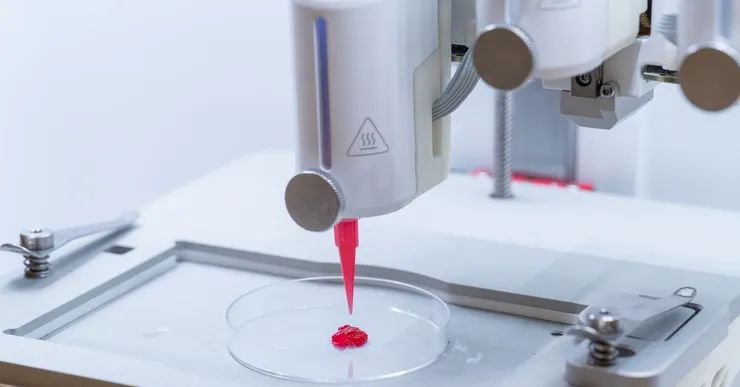
Now, work by Swedish researchers may have brought medicine closer to being able to regenerate living skin. They have developed two types of 3D bioprinting techniques to artificially generate thick skin that is vascularized, meaning it contains blood vessels. One technique produces skin that is packed with cells, and the other produces arbitrarily shaped blood vessels in the tissue. The two technologies take different approaches to the same challenge. The approaches have been outlined in two studies published in the journal Advanced Healthcare Materials.

“The dermis is so complicated that we can’t grow it in a lab. We don’t even know what all its components are,” said Johan Junker, an associate professor at Linköping University and specialist in plastic surgery who lead this work, in a statement. “That’s why we, and many others, think that we could possibly transplant the building blocks and then let the body make the dermis itself.”

The Linköping team using a 3D bioprinter.

Photograph: Magnus Johansson/Linköping University

Junker and his team designed a bio-ink called “μInk” in which fibroblasts—cells that produce dermal components such as collagen, elastin, and hyaluronic acid—are cultured on the surface of small spongy gelatin grains and encased in a hyaluronic acid gel. By building up this ink three-dimensionally using a 3D printer, they were able to create a skin structure filled with high-density cells at will.

In a transplantation experiment using mice, the researchers confirmed that living cells grew inside tissue fragments made from this ink, secreting collagen and rebuilding the components of the dermis. New blood vessels also grew inside the graft, indicating that the conditions for long-term tissue fixation were met.

Blood vessels play an extremely important role in the construction of artificial tissues. No matter how many cells are cultured to create a tissue model, without blood vessels, oxygen and nutrients cannot be carried evenly to all cells. And without blood vessels, as the tissue structure grows, the cells in the center of the tissue die.

The research team has also created a technology called REFRESH (Rerouting of Free-Floating Suspended Hydrogel Filaments), which enables the flexible construction of blood vessels in artificial tissues by printing and arranging threads of hydrogel, a gels that 98 percent water. These threads are much tougher than ordinary gel materials and can maintain their shape even when tied or braided. Moreover, they also have shape-memory properties that allow them to return to their original shape even when crushed.

The phone is 150 years outdated. It’s nonetheless altering all the pieces.
6 Best Phones You Can’t Buy in the US (2025), Tested and Reviewed
Google’s Nano Banana Brings Extra Visible Aptitude to NotebookLM’s Video Overviews
7 Greatest Webcams (2025), Examined and Reviewed
Oura CEO talks potential IPO and ‘nonnegotiable’ data privacy
TAGGED:3DPrintedArtificialBloodCirculationCreateResearchersSkin
Share This Article
Facebook Email Print
Leave a Comment

Leave a Reply Cancel reply

Your email address will not be published. Required fields are marked *

Follow US

Find US on Social Medias
FacebookLike
XFollow
YoutubeSubscribe
TelegramFollow

Weekly Newsletter

Subscribe to our newsletter to get our newest articles instantly!

Forex

Market Action
Popular News
1758122716 aa logo rgba no text square.png
Entertainment

Zimbabwe: ‘For Little Shayna – ‘ Rifle Artist Connects to Zimbabwe Roots Through Whimsical Creations

PhreeNews
PhreeNews
September 17, 2025
David Sacks: Media Protection Masks Organized, Politically-Motivated Interference With ICE | Video
Body20 Franchise: Inside a Confirmed, Scalable Mannequin for South African Traders
UWB & Bluetooth 6.0 Defined
‘Golden second’ as Messi meets Tendulkar

Categories

  • Sports
  • Science
  • Sports
  • Business
  • Tech
  • Entertainment
  • Tech
  • Politics
  • Markets
  • Travel

About US

At PhreeNews.com, we are a dynamic, independent news platform committed to delivering timely, accurate, and thought-provoking content from Africa and around the world.
Quick Link
  • Blog
  • About Us
  • My Bookmarks
Important Links
  • About Us
  • 🛡️ PhreeNews.com Privacy Policy
  • 📜 Terms & Conditions
  • ⚠️ Disclaimer

Subscribe US

Subscribe to our newsletter to get our newest articles instantly!

© 2026 PhreeNews. All Rights Reserved.
Welcome Back!

Sign in to your account

Username or Email Address
Password

Lost your password?
