


Human macrophages are central gamers in innate immunity, irritation, tissue restore, an infection response, most cancers biology, and neurodegenerative illness. As a result of they reply quickly to environmental alerts and assist coordinate immune exercise, macrophages are sometimes used to check illness mechanisms that contain continual irritation, pathogen sensing, immune regulation, and mobile stress.
Nevertheless, macrophage analysis has a persistent problem: acquiring sufficient constant, experimentally tractable human macrophages for large-scale purposeful research. Main macrophages derived from blood monocytes are helpful, however they’ll differ considerably between donors and preparations. This variability can complicate reproducibility, particularly in pooled genetic screens or high-throughput purposeful genomics experiments.
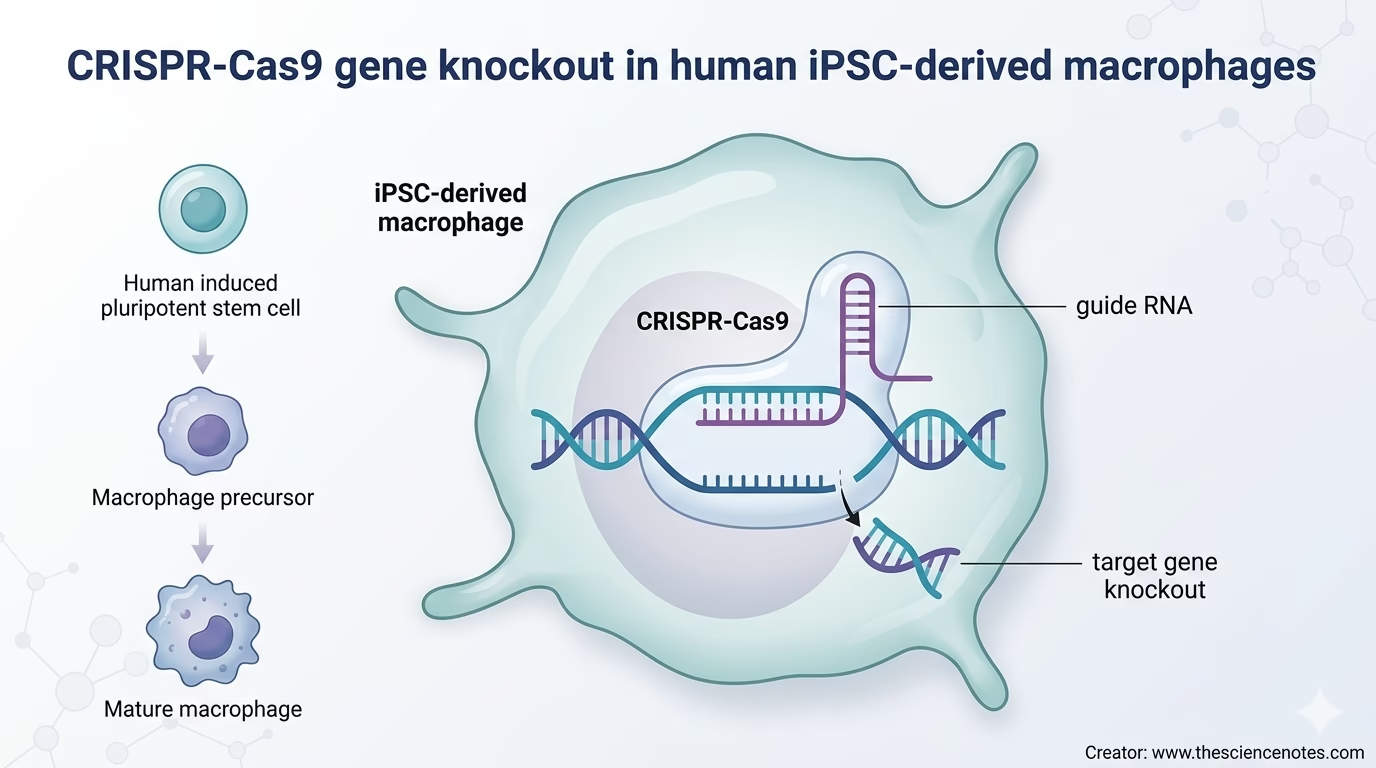
Human induced pluripotent stem cell-derived macrophages, typically abbreviated as iPSC-derived macrophages, supply a robust various. They are often generated from pluripotent stem cell programs, expanded by means of managed differentiation workflows, and used to mannequin macrophage biology in a extra standardized approach. When mixed with CRISPR-Cas9 gene knockout know-how, these cells turn out to be a useful platform for figuring out genes that regulate irritation, innate immune activation, host-pathogen interactions, and disease-relevant macrophage phenotypes.
A 2024 STAR Protocols article by Navarro-Guerrero and colleagues describes an optimized method for CRISPR-Cas9 knockout in human iPSC-derived macrophages utilizing lentiviral supply supported by VPX virus-like particles. The protocol focuses on sensible points that always restrict CRISPR screening in macrophage-like cells, together with lentiviral transduction effectivity, antibiotic choice, library titration, and cell viability.
What Are iPSC-Derived Macrophages?
iPSC-derived macrophages are macrophage-like immune cells produced from induced pluripotent stem cells. Induced pluripotent stem cells are grownup cells which were reprogrammed right into a pluripotent state, permitting them to distinguish into many cell sorts below managed situations.
In macrophage analysis, iPSC-derived programs are enticing as a result of they’ll present a extra scalable and constant supply of human macrophages than conventional major monocyte-derived macrophage fashions. That is particularly useful for genome-wide CRISPR screens, the place researchers may have giant numbers of cells whereas sustaining constant differentiation standing and phenotype.
A key requirement for profitable CRISPR screening in these cells is the era of a homogeneous macrophage inhabitants. The STAR Protocols article emphasizes the significance of confirming macrophage id and immune responsiveness earlier than screening. Markers equivalent to CD11b and CD14 are generally used to help macrophage characterization, whereas purposeful activation might be assessed by means of inflammatory response markers after stimulation.
In sensible phrases, the higher the macrophage differentiation, the extra interpretable the CRISPR outcomes. Poorly differentiated cells could produce deceptive phenotypes, cut back screening sensitivity, or obscure the function of genes concerned in macrophage-specific biology.
Why Use CRISPR-Cas9 Knockout in iPSC-Derived Macrophages?
CRISPR-Cas9 knockout know-how permits researchers to disrupt particular genes and observe the ensuing modifications in cell habits. In pooled CRISPR screening, 1000’s of information RNAs might be launched right into a cell inhabitants, permitting systematic identification of genes that affect survival, activation, cytokine manufacturing, an infection response, or different phenotypes.
For macrophages, this method is particularly helpful as a result of many disease-relevant pathways contain advanced regulatory networks. These embody:
Sample recognition receptor signalingCytokine productionPhagocytosisAntigen presentationInflammasome activationLipid handlingHost-pathogen interactionsImmune suppression in cancerNeuroinflammatory signaling
By knocking out genes throughout the genome or inside focused gene units, researchers can determine regulators that will be troublesome to find utilizing candidate-gene approaches alone.
The TKOv3 CRISPR library mentioned within the supply protocol is an instance of a pooled genome-wide knockout library. It targets 1000’s of human protein-coding genes utilizing a number of information RNAs per gene, making it appropriate for purposeful genomics experiments the place complete gene interrogation is required. Its comparatively compact design can also be helpful when cell numbers are restricted, which is usually the case in iPSC-derived immune cell programs.
The Problem: Delivering CRISPR Parts into Macrophages
Macrophages will not be at all times simple to genetically manipulate. Lentiviral vectors are generally used to ship CRISPR-Cas9 programs into mammalian cells, however macrophages and associated myeloid cells can prohibit viral transduction. This will cut back modifying effectivity and compromise pooled screening high quality.
One cause for this problem includes antiviral restriction components. SAMHD1, for instance, is understood to limit lentiviral transduction in sure immune cells by limiting the intracellular atmosphere wanted for environment friendly reverse transcription. The STAR Protocols workflow makes use of VPX virus-like particles to assist overcome this restriction.
VPX is a viral accent protein related to degradation of SAMHD1. Within the protocol, VPX virus-like particles are used alongside lentiviral CRISPR supply to enhance transduction effectivity in iPSC-derived macrophages. Western blotting for SAMHD1 is used as a quality-control readout to evaluate the effectiveness of VPX-VLP remedy.
This optimization is vital as a result of low transduction effectivity can distort pooled CRISPR screens. If too few cells obtain information RNAs, the display could lose library illustration. If too many cells obtain a number of information RNAs, gene-level interpretation turns into extra difficult. A fastidiously optimized transduction workflow helps protect each organic sign and screening integrity.
Core Components of an Optimized CRISPR Knockout Workflow
Though the revealed protocol incorporates detailed laboratory steps, the general workflow might be understood by means of a number of main phases.
1. Verify Macrophage Differentiation and Operate
Earlier than performing CRISPR knockout or screening, researchers should be certain that the iPSC-derived cells have differentiated right into a constant macrophage inhabitants. This consists of checking marker expression and confirming that the cells can reply to innate immune stimuli.
This step isn’t non-obligatory. If cells are heterogeneous, poorly differentiated, or functionally impaired, downstream CRISPR phenotypes could replicate differentiation artifacts slightly than true gene operate.
2. Optimize Antibiotic Choice
Many lentiviral CRISPR vectors embody an antibiotic resistance marker. After transduction, antibiotic choice enriches for cells that obtained the vector. Nevertheless, antibiotic publicity can have an effect on macrophage biology, viability, and inflammatory activation.
The protocol makes use of a viability-based method to determine the minimal antibiotic focus wanted to eradicate non-transduced cells. This optimization helps stability choice stringency with preservation of macrophage well being.
The supply article additionally notes an vital organic limitation: puromycin choice could affect immune activation. Within the reported system, puromycin-treated transduced macrophages confirmed decreased TNF expression after LPS stimulation in contrast with controls. This commentary issues as a result of choice situations can alter the phenotype being studied.
3. Decide Polybrene Tolerance
Polybrene is usually used to enhance lentiviral transduction by decreasing charge-based repulsion between viral particles and the cell floor. Nevertheless, it may additionally have an effect on cell viability relying on focus and cell sort.
An optimized workflow due to this fact consists of figuring out the best polybrene publicity that improves transduction with out compromising macrophage survival or operate. That is particularly vital in delicate or non-dividing immune cell fashions.
4. Produce and Titrate VPX Virus-Like Particles
VPX-VLPs are included to boost lentiviral transduction in macrophage-like cells. The supply protocol describes large-scale VPX-VLP manufacturing and subsequent titration utilizing SAMHD1 depletion as a readout.
The important thing idea is that VPX-VLPs have to be purposeful and appropriately matched to the goal cell system. Too little VPX exercise could fail to enhance transduction. Poor-quality preparations could create inconsistent outcomes. Extreme or poorly managed publicity could have an effect on cell well being.
5. Decide Lentiviral CRISPR Library MOI
Multiplicity of an infection, or MOI, refers back to the common variety of viral particles delivered per cell. In pooled CRISPR knockout screens, researchers typically intention for low MOI so that almost all transduced cells obtain just one information RNA. This helps clearer project of phenotype to gene knockout.
The protocol makes use of antibiotic choice and viability measurement to find out the quantity of lentiviral CRISPR library that produces the specified transduction vary below the precise screening situations. That is vital as a result of MOI can not at all times be reliably transferred throughout plate codecs, cell densities, media situations, or viral preparations.
6. Carry out CRISPR-Cas9 Knockout and Phenotypic Readout
As soon as the system is optimized, iPSC-derived macrophage precursors might be transduced with CRISPR-Cas9 lentiviral constructs. After differentiation and applicable choice or validation, cells might be analyzed utilizing viability assays, movement cytometry, cytokine readouts, protein detection, sequencing, or different phenotype-specific strategies.
The endpoint is determined by the analysis query. For instance, a display may determine genes that regulate inflammatory cytokine manufacturing, macrophage survival, phagocytosis, pathogen response, or disease-associated immune states.
Why VPX Virus-Like Particles Matter in Macrophage CRISPR Screening
The usage of VPX-VLPs is likely one of the most vital options of the optimized workflow. Macrophages and associated myeloid cells can resist lentiviral transduction due to intrinsic antiviral mechanisms. VPX-VLPs assist cut back this barrier by focusing on SAMHD1, thereby enhancing the situations for lentiviral supply.
For CRISPR screening, this enchancment can have a number of advantages:
Larger transduction effectivity: Extra cells obtain CRISPR parts, enhancing the feasibility of screens in cell-limited programs.
Higher library illustration: Adequate illustration of information RNAs is vital for pooled screening accuracy.
Decrease strain to make use of extreme viral enter: Higher supply can cut back the necessity for overly aggressive transduction situations that will hurt cells.
Improved reproducibility: Optimized VPX-VLP titration can cut back batch-to-batch variability.
Nevertheless, VPX-VLP use additionally introduces one other variable that have to be validated. The protocol makes use of SAMHD1 detection by western blotting as a purposeful quality-control measure, which helps affirm whether or not VPX-VLP preparations are performing as meant.
Purposes in Irritation and Innate Immunity Analysis
CRISPR knockout in iPSC-derived macrophages is especially useful for learning innate immune pathways. Macrophages are among the many first immune cells to detect an infection, tissue harm, and inflammatory alerts. They produce cytokines, engulf particles, coordinate immune responses, and form tissue microenvironments.
An optimized CRISPR platform can help analysis into:
Power Irritation
Many ailments contain persistent macrophage activation or immune dysregulation. These embody atherosclerosis, inflammatory bowel illness, rheumatoid arthritis, and metabolic inflammatory situations. CRISPR screens can assist determine genes that promote or suppress inflammatory signaling.
Neurodegenerative Illness
Macrophage-like cells and tissue-resident immune cells are implicated in neuroinflammation. Whereas microglia are the resident macrophages of the central nervous system, iPSC-derived macrophage programs can nonetheless assist examine broader myeloid immune mechanisms related to neurodegenerative illness.
Most cancers Development
Tumor-associated macrophages can suppress anti-tumor immunity, promote angiogenesis, transform tissue, and affect response to remedy. CRISPR knockout research can determine macrophage genes that regulate immune suppression, tumor interplay, or inflammatory signaling in most cancers contexts.
Infectious Illness
Macrophages work together with micro organism, viruses, fungi, and parasites. They’ll eradicate pathogens, however some pathogens exploit macrophage biology for survival or dissemination. CRISPR screening can determine host components concerned in susceptibility or resistance to an infection.
Sepsis and Hyperinflammation
Macrophage cytokine responses are central to systemic inflammatory syndromes. Purposeful genomics can assist determine regulators of extreme cytokine manufacturing, immune paralysis, or inflammatory decision.
High quality Management Concerns
A profitable CRISPR knockout experiment in iPSC-derived macrophages is determined by greater than merely delivering Cas9 and information RNAs. A number of quality-control checkpoints are mandatory.
Macrophage Id
Researchers ought to affirm that cells categorical anticipated macrophage markers and show applicable purposeful habits. A homogeneous beginning inhabitants improves confidence in downstream phenotypes.
Transduction Efficiency
Lentiviral supply needs to be assessed below the identical situations used for the precise experiment. Adjustments in media, plate format, cell density, differentiation stage, viral batch, or components can have an effect on transduction.
VPX-VLP Operate
As a result of VPX-VLPs are included to enhance supply, their exercise needs to be confirmed. SAMHD1 discount is a related readout within the revealed workflow.
Cas9 Expression
Cas9 expression needs to be validated, notably in knockout workflows the place inefficient modifying would scale back phenotype detection.
Knockout Affirmation
For focused knockout experiments, protein-level validation can affirm whether or not gene disruption has produced the anticipated lack of goal expression.
Information RNA Distribution
In pooled screens, next-generation sequencing can be utilized to look at information RNA illustration. Poor illustration can cut back display high quality and result in false negatives or biased outcomes.
Limitations of CRISPR Knockout in iPSC-Derived Macrophages
Regardless of its strengths, this method has limitations.
Antibiotic Choice Can Alter Macrophage Phenotype
The supply protocol highlights that puromycin choice can cut back TNF expression after inflammatory stimulation. This is a crucial warning for researchers learning cytokine responses. Choice situations have to be integrated into experimental design and management choice.
Differentiation High quality Is Vital
If iPSC-derived macrophages will not be homogeneous or functionally mature, screening outcomes could also be troublesome to interpret. Differentiation variability can introduce noise or bias.
Transduction Situations Require Optimization
Macrophage transduction is determined by a number of interacting variables, together with viral high quality, cell density, polybrene tolerance, VPX-VLP exercise, spinfection situations, and cell state. Small modifications can have an effect on effectivity and viability.
Cell Viability Can Restrict Screens
CRISPR screens require sufficient viable cells to protect library complexity. If transduction or choice reduces viability an excessive amount of, library protection could endure.
Knockout Biology Could Be Context-Dependent
The operate of a gene in macrophages could rely upon differentiation state, stimulation situation, illness mannequin, genetic background, or assay timing. CRISPR outcomes needs to be validated in related secondary assays.
Troubleshooting Ideas
The supply protocol consists of troubleshooting steerage for widespread issues. At a excessive stage, these points fall into a number of classes.
Poor Macrophage Differentiation
If cells don’t categorical anticipated markers or reply poorly to stimulation, the differentiation system needs to be reviewed. Media high quality, reagent freshness, and differentiation timing can all affect macrophage id.
Inefficient VPX-VLP Manufacturing
VPX-VLP high quality might be affected by plasmid high quality, transfection efficiency, cell well being, contamination, and producer-cell passage historical past. Consistency in manufacturing situations is crucial.
Low Transduction Effectivity
Low effectivity could consequence from decreased viral titer, repeated freeze-thaw cycles, insufficient transduction enhancement, suboptimal cell density, or inadequate VPX-VLP exercise. The supply protocol notes that lentiviral titer can decline with freeze-thaw cycles, so aliquoting and storage practices matter.
Low Cell Viability
Cell dying after transduction can replicate extreme stress, poor plating density, viral toxicity, reagent toxicity, or choice strain. Bettering cell dealing with and optimizing publicity situations can assist protect viability.
Inadequate Protein for Validation
Western blotting can require substantial protein enter. When pattern availability is restricted, extra delicate automated protein detection programs could also be applicable.
Analysis Affect of the Optimized Protocol
The main contribution of the Navarro-Guerrero et al. protocol is that it adapts CRISPR-Cas9 knockout screening to a difficult however extremely related human immune cell mannequin. iPSC-derived macrophages present a scalable platform, whereas VPX-VLP-assisted lentiviral supply helps overcome a key technical barrier.
This mixture permits researchers to ask gene-function questions in macrophages extra systematically. As an alternative of learning one candidate gene at a time, researchers can display broad libraries and determine regulators of immune phenotypes in a human mobile context.
For illness biology, that is particularly vital. Macrophages will not be passive immune cells. They form irritation, tissue reworking, tumor development, an infection end result, and immune decision. Understanding the genes that management these processes can reveal therapeutic targets and enhance illness modeling.
Finest Practices for Deciphering CRISPR Display Outcomes
CRISPR screens generate hypotheses. They don’t robotically show mechanism. Sturdy interpretation requires validation.
Researchers ought to take into account:
Information-level consistency: A number of information RNAs focusing on the identical gene ought to ideally present concordant results.
Unbiased validation: Candidate genes needs to be examined in follow-up experiments utilizing separate information RNAs or orthogonal approaches.
Phenotype specificity: A gene affecting cytokine output might also have an effect on cell viability, differentiation, or stress response. These prospects needs to be separated experimentally.
Choice results: Antibiotic choice and transduction situations can affect immune activation and needs to be included in controls.
Organic context: A gene hit below one stimulation situation could not behave the identical approach below one other.
This cautious interpretation is especially vital in macrophages, the place activation states are dynamic and extremely attentive to environmental situations.
Regularly Requested Questions
What’s the essential objective of CRISPR knockout in iPSC-derived macrophages?
The primary objective is to determine genes that regulate macrophage biology. This will embody genes concerned in irritation, innate immune activation, cytokine manufacturing, pathogen response, survival, differentiation, and disease-associated immune phenotypes.
Why are iPSC-derived macrophages helpful for CRISPR screening?
They supply a scalable and comparatively standardized human macrophage mannequin. This helps overcome some limitations of major macrophages, equivalent to donor variability and restricted cell availability.
Why is lentiviral supply difficult in macrophages?
Macrophages have intrinsic antiviral protection mechanisms that may prohibit lentiviral transduction. These mechanisms can cut back the effectivity of CRISPR element supply.
What function do VPX virus-like particles play?
VPX virus-like particles assist enhance lentiviral transduction in macrophage-like cells by counteracting SAMHD1-related restriction. This will enhance CRISPR supply effectivity and help higher screening efficiency.
Why is MOI vital in pooled CRISPR screens?
Low MOI helps be certain that most transduced cells obtain a single information RNA. This makes it simpler to hyperlink a mobile phenotype to disruption of a selected gene.
Can antibiotic choice have an effect on macrophage habits?
Sure. The supply protocol studies that puromycin choice can cut back TNF expression after LPS stimulation in transduced iPSC-derived macrophages. This implies choice situations have to be fastidiously managed and interpreted.
What are widespread readouts after CRISPR knockout?
Widespread readouts embody cell viability, movement cytometry, cytokine expression, western blotting, sequencing-based information illustration, and phenotype-specific purposeful assays.
Is that this method solely helpful for genome-wide screens?
No. The identical common optimization rules can help focused knockout research, pathway-focused CRISPR libraries, and single-gene purposeful validation.
Conclusion
CRISPR knockout in iPSC-derived macrophages is a robust method for learning human innate immunity and macrophage-driven illness mechanisms. By combining iPSC-derived macrophage fashions with optimized lentiviral CRISPR-Cas9 supply, researchers can examine gene operate at scale in a related human immune cell context.
The STAR Protocols workflow by Navarro-Guerrero and colleagues highlights a number of vital optimization factors: macrophage differentiation high quality, antibiotic choice, polybrene tolerance, VPX-VLP performance, lentiviral MOI dedication, Cas9 expression, knockout validation, and information RNA distribution. Collectively, these parts help extra dependable CRISPR screening in a cell sort that’s biologically vital however technically difficult.
For irritation, an infection, most cancers, neurodegeneration, and immune regulation analysis, optimized CRISPR-Cas9 knockout in iPSC-derived macrophages affords a route towards discovering key regulators of macrophage operate. The strongest outcomes will come from workflows that mix cautious technical optimization with rigorous organic validation.
This text relies on the scientific content material offered from:
Navarro-Guerrero, E., Baronio, R., Tay, C., Knight, J. C., & Ebner, D. V. “Optimized protocol for CRISPR knockout of human iPSC-derived macrophages.” STAR Protocols, Quantity 5, Concern 1, 2024.